Driveway & Access Road Preparation in Kelowna & the Okanagan Valley
Subgrade, gravel, drainage and grade control built for our slopes and dry climate
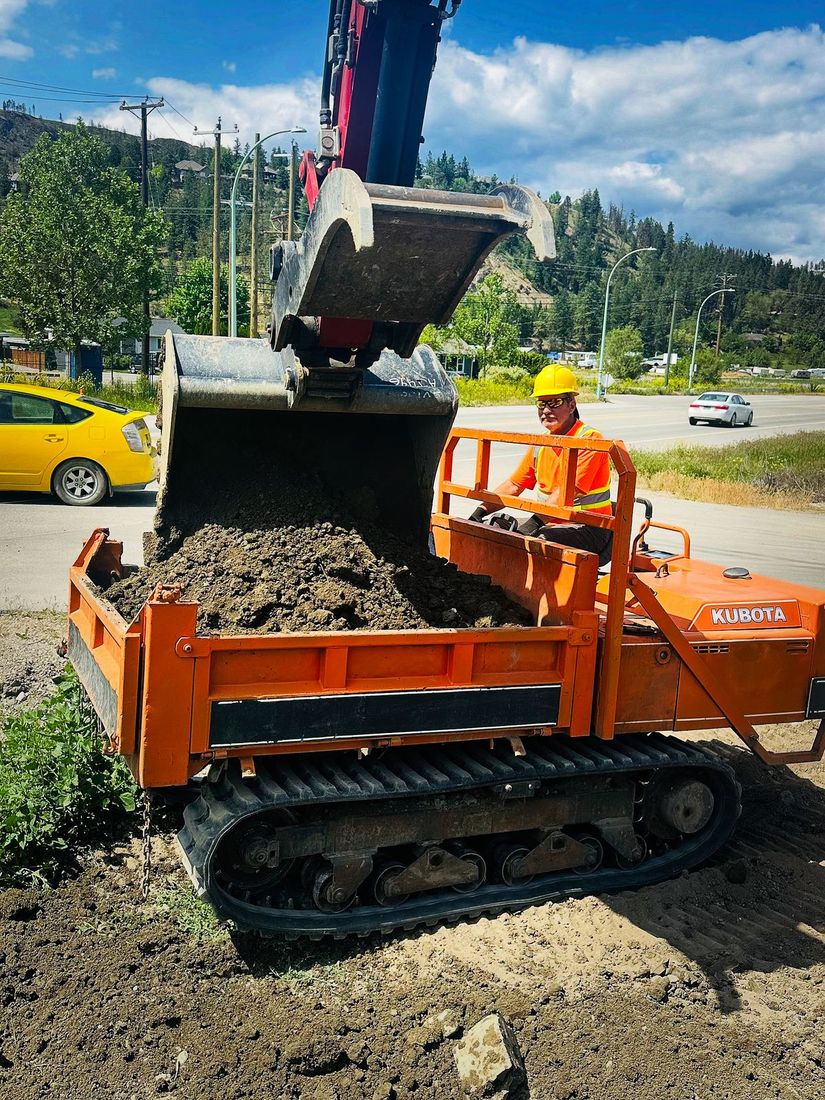
A lot of Okanagan driveways aren’t the short, flat strips you see in the suburbs. They’re long runs up a bench, a climb to a hillside home above Okanagan Lake, a curving access road into an orchard or acreage, sometimes a switchback or two to reach a view lot. Build one of those properly and it shrugs off the summer dust, the winter freeze and the flash storms for decades. Build it carelessly and you’re grading out ruts every spring and chasing washouts after every cloudburst.
At GroundStone Excavating we build driveways and rural access roads across the Central and North Okanagan. Our dry climate, our slopes and our gravelly soils all change how it’s done compared to the coast — so here are the questions we get asked most.
Why does my gravel driveway keep washboarding and rutting?
Almost always because of what’s underneath, not the gravel on top. If a driveway was just laid over native ground without a proper compacted base, traffic and water work it loose — and in the Okanagan that shows up as washboarding on the flats and rutting and washouts on the grades. Loose sandy and silty soils don’t give gravel anything solid to lock into, so the surface migrates around. The lasting fix is in the layers below: a stable, compacted, well-drained base that the driving surface can actually sit on.
Do I really need a base, or can I just add gravel?
You need a base. Dumping fresh gravel on a failing driveway is like painting over rot — it looks better for a season and then the same problems come back. A driveway that lasts is built in layers: the subgrade is prepared and compacted, a coarse base course of crushed rock is placed and compacted to carry the load and let water drain, then a finer crushed surface goes on top to drive on. This is the same layered, compacted approach we bring to site preparation on a building pad. The good news in much of the Okanagan is that our coarse, gravelly native soils sometimes make a decent base with the right work — but it still has to be shaped and compacted properly, not just left as-is.
What’s the best gravel for a driveway here?
For most driveways it’s a two-layer approach: a coarse crushed base (often a pit-run or a larger crushed product) for strength and drainage underneath, topped with a road crush or “3/4 minus” — crushed rock with fines that pack down into a firm, gradable surface. The fines are what let it compact tight and shed water; clean round gravel with no fines never locks up and just rolls under your tires. On our steeper Okanagan grades, getting that surface mix and compaction right is what keeps the driveway from scattering downhill in the first big rain.
How do you deal with steep driveways and access roads?
Grade is the defining challenge on a lot of Okanagan properties. A driveway that’s too steep is hard on vehicles, dangerous in winter, and prone to its surface washing away. We lay out the route to keep grades sensible — sometimes that means a longer, curving alignment or a switchback rather than the steepest straight shot — and we pay close attention to drainage, because water moving down a steep road is the number-one thing that destroys it. On the looser, erodible soils common here, a steep access road without proper water control won’t last a single wet season.
How do you keep water and dust off the driveway?
Two very Okanagan problems, opposite seasons. In a flash summer storm or the spring melt, water has to be moved off the road surface before it can channel and cut — so we crown the surface so it sheds to the sides, cut ditches along the uphill edge, and install culverts to carry snowmelt and storm flow safely across or under the road instead of down it. That water-control work overlaps heavily with proper drainage and erosion control. Larger drainage works can tie into requirements set by your local government; the City of Kelowna’s development and servicing standards are an example of the kind of rules that apply. The other half of the year it’s dust — a long gravel driveway in a dry Okanagan summer can be a real dust source, and there are surface treatments and compaction choices that help keep it down.
How long should a properly built driveway last?
A driveway built on a real base, with the water properly managed, should give you many years of service with only light maintenance — an occasional top-up and re-grade. The ones that fail fast are almost always the ones built in a hurry: no base prep, no drainage, gravel straight onto soft ground. In our climate, with hot dry summers, freezing winters and sudden hard rains, the driveway is constantly being tested. Building it right the first time costs less than rebuilding a cheap one every few years.
Why GroundStone Excavating?
A good Okanagan driveway is mostly the part you can’t see — the base and the drainage. We build access from the ground up: prepared subgrade, compacted gravel layers, sensible grades on hillside lots, and water control that survives both the flash storms and the spring melt. Whether it’s a residential driveway in Kelowna, a long access road to a Lake Country bench property, or a route into an orchard near Vernon, we’ll build you something that lasts.
Building or fixing a driveway? Let’s build it to last.
Book a free, no-pressure on-site estimate for residential or commercial driveways and access roads in Kelowna, West Kelowna, Penticton, Lake Country, Vernon and across the Okanagan, or explore the rest of what we do to see how the pieces fit together.