Drainage Solutions in Langley & the Fraser Valley
Solving pooling water, basement leaks and failing perimeter drains in local soil
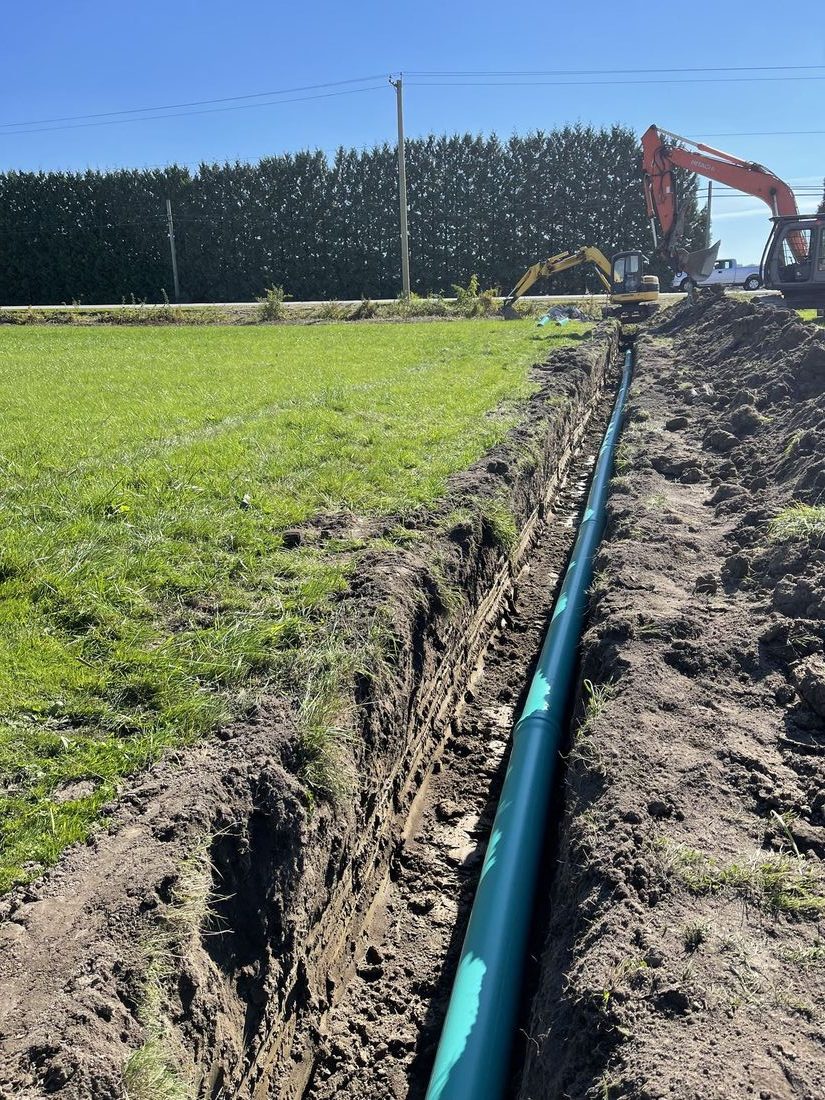
If you live in the Fraser Valley, you already know the rain doesn’t mess around. From October through spring, it just keeps coming — and our heavy clay soil holds onto every drop instead of letting it soak away. That combination is why so many Langley and Abbotsford homeowners end up with a soggy lawn, a damp basement, or a perimeter drain that quietly gave up years ago. Water always wins eventually. The trick is giving it somewhere to go before it finds your foundation.
At GroundStone Excavating, drainage is one of the problems we solve most often, because around here it’s everywhere. Below we’ll walk through what causes these issues in our specific soil, and answer the questions people ask us when the puddles won’t quit.
Why does water pool in my yard?
Two reasons, usually, and often both at once. First, our Fraser Valley clay drains slowly — water can’t percolate down through it the way it would through sandy soil, so it sits on the surface. Second, the land isn’t graded to move water away. If your yard is flat, or worse, slopes gently toward the house, rainfall has nowhere to drain and pools wherever the ground dips.
Pooling water is more than an eyesore. It kills grass, breeds mosquitoes, and — most importantly — keeps the soil right against your foundation saturated all winter. That saturated ground is the first link in a chain that ends with water in your basement.
Why is water getting into my basement?
When soil around your foundation stays waterlogged, it creates what’s called hydrostatic pressure: the weight of all that groundwater pushing against your basement walls and floor slab. Concrete is strong, but it isn’t waterproof, and that pressure will force moisture through hairline cracks, cold joints, and any weak point it can find. A basement that’s fine all summer and damp every November isn’t haunted — it’s a drainage problem.
The system that’s supposed to prevent this is your perimeter drain. When it’s working, it relieves that pressure before it ever reaches your walls. When it isn’t, the water has to go somewhere — and that somewhere is inside.
How do I know if my perimeter drains are failing?
Perimeter drains (also called weeping tile or footing drains) run around the base of your foundation, collecting groundwater and carrying it away. The catch is that they don’t last forever. Many older Fraser Valley homes — especially anything built before the 1990s — still have the original clay tile or concrete pipe, and after decades underground those lines crack, separate at the joints, get crushed, or fill with tree roots and silt.
Warning signs include water in the basement, musty smells, efflorescence (that white chalky residue on concrete), pooling right against the foundation, and downspouts that gurgle or back up. The only way to know for sure is a camera inspection, which shows exactly where the line is collapsed or blocked. Sometimes it’s a single bad section we can dig up and repair; sometimes the whole system is at the end of its life and needs replacing. On most local homes the footing sits roughly 1.2 to 2.5 metres below grade, so this is real excavation work — closely related to foundation excavation — and done right, it solves the problem for good.
What is a French drain, and do I need one?
A French drain is a simple, proven idea: a gravel-filled trench with a perforated pipe at the bottom, wrapped in filter fabric so silt doesn’t clog it. Water seeps into the gravel, drops into the pipe, and gets carried off to a safe outlet instead of soaking your yard. They’re one of the best tools we have for chronic pooling, soggy low spots, and water sheeting toward a building.
Whether you need one depends on where the water is collecting and why. Sometimes a French drain along the wet side of a property is the whole fix. Other times it’s one piece of a larger plan that includes regrading and surface drainage. Cost depends on length, depth, soil, and where the water can be sent — we’ll give you a straight estimate after we see the site, not a number pulled from thin air.
Where does all this water actually go?
This is the part people forget: collecting water is only half the job — it has to drain somewhere legal and effective. In many cases that’s a tie-in to the municipal storm sewer, which usually means running a utility trench to the connection point. In the Township of Langley, connecting to the storm system requires a Stormwater Service Connection Permit. One rule that trips homeowners up: roof and footing drains are never allowed to tie into the sanitary sewer — they must go to the storm sewer, or where no connection is available, an approved private system such as an infiltration gallery.
We handle this side properly, so your drainage doesn’t just move the problem to the wrong pipe or your neighbour’s yard. Where a storm connection isn’t available, we design an on-site solution that actually disperses the water on your property.
What about surface drainage and grading?
Not every drainage fix means digging to the footings. A lot of problems start at the surface and can be solved there: regrading the soil so it slopes away from the house, adding catch basins to capture runoff, extending downspouts well clear of the foundation, and shaping swales that guide water to a safe outlet. Often the smartest plan combines surface work with subsurface drainage — handle the easy water up top, and let the French drains and perimeter system deal with what gets through. The goal is always the same: water moving away from your home on its own, every season.
Why GroundStone Excavating?
Drainage isn’t guesswork — it’s reading the land, knowing how our clay behaves, and getting the grades and outlets exactly right. We’ve solved these problems all over Langley and the Fraser Valley, we respect the local permit rules, and we leave your property dry and tidy, not torn up. If you’re tired of the puddles, the damp, or that nagging worry every time the forecast turns, let’s take a look.
Tired of the water? Let’s get your property draining right.
Book a free, no-pressure on-site assessment for drainage anywhere in Langley and the Fraser Valley, or explore the rest of what we do to see how drainage fits into the bigger picture.