Utility Trenching Services in Langley & the Fraser Valley
Clean, safe trenching for water, sewer, gas, electrical and drainage lines
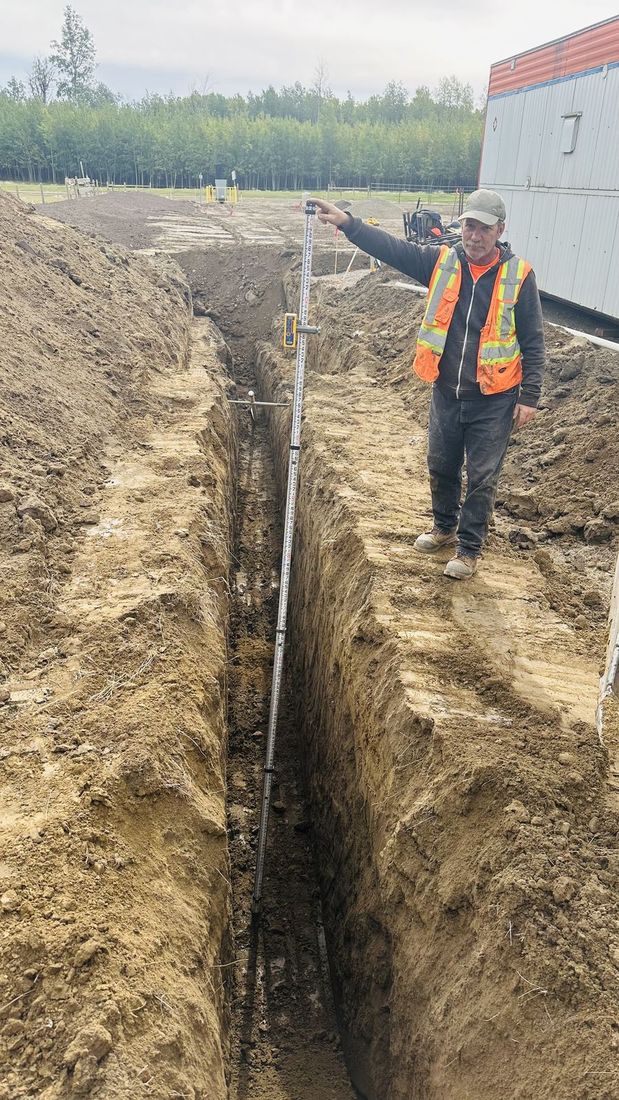
Trenching is one of those jobs that looks simple from the road. You dig a line, you drop in a pipe or some conduit, you fill it back in. Easy, right? Anyone who has actually done it knows better. The difference between a trench that lasts decades and one that settles, floods, or — worst case — slices through a live gas line comes down to depth, slope, bedding, and knowing exactly what’s already buried under your feet.
At GroundStone Excavating, utility trenching is bread-and-butter work. We dig clean, properly graded trenches for water, sewer, gas, electrical and drainage lines across Langley, Aldergrove, Abbotsford and the wider Fraser Valley. Here are the questions homeowners and builders ask us most — and straight answers to each one.
What exactly is utility trenching?
Utility trenching is the digging of a narrow, controlled channel in the ground so a service line can be buried safely. That line might carry fresh water to your house, waste out to the sewer or septic field, power to a shop or suite, natural gas to a furnace, or stormwater away from your foundation. The trench itself is only half the job — doing it right means the correct depth, a stable base for the pipe, careful backfill, and compaction so the ground doesn’t sink later.
How much does utility trenching cost?
Most homeowners want a number, so here’s an honest framework. Trenching is usually priced by the linear foot, and the rate climbs with depth and difficulty. A shallow, easy run is at the low end; a deep sewer trench through clay or rock sits much higher. The big cost drivers are how long the run is, how deep it has to go, what the soil is like, whether multiple lines are involved, and how much surface has to be restored afterward.
Our Fraser Valley clay can slow digging down compared to sandy ground, which is worth knowing going in. Rather than throw out a guess over the phone, we walk the route with you, look at the soil and access, and give you a real written estimate — so there are no surprises once the machine is on site.
Do I really have to call before digging?
Yes — every time, and it’s the law. Before any excavation in British Columbia, a locate request must be placed with BC 1 Call (also known as Click Before You Dig). It’s a free service, and you need to submit the request at least three full business days before work begins. The utility owners then mark where their lines — gas, power, telecom, water — run on your property so nobody puts a shovel through something dangerous.
This matters more than people realize. Hitting a gas line is a life-safety emergency, and damaging any utility can mean steep repair bills and fines. The good news: this is standard practice for us. We handle the locate process and dig safely around what’s marked, including careful hand-digging near gas lines where the rules require it. You don’t have to figure any of it out yourself.
How deep does a trench need to be?
It depends entirely on what’s going in it, and the right answer is set by code and the utility provider — not by guesswork. As a rough guide, low-voltage and irrigation lines sit shallow, water, gas and electrical lines run deeper, and sewer lines go deepest of all because they have to stay below the frost line and hold a precise downhill slope so waste flows on its own. Getting that sewer slope exactly right is fussy work, and it’s exactly the kind of detail that separates a trench that drains forever from one that backs up.
We dig to the depth your specific line and local requirements call for, every time. No shortcuts that come back to haunt you in a few winters.
Can I put several lines in one trench?
Often, yes — and it can save you real money. Combining compatible utilities into a single shared trench means one dig instead of several, which cuts labour and surface restoration. There are rules about spacing and separation between certain lines (you can’t just pile gas and electrical on top of each other), but where it’s allowed and done correctly, a joint trench is one of the smartest ways to keep a project efficient. If you’re running water, power and other services to the same spot — often as part of broader site preparation — mention it early, and we’ll plan the route so you’re not paying to open the same ground twice.
What about backfill and cleanup?
A trench isn’t finished when the pipe goes in. Proper bedding — clean sand or gravel under and around the line — protects it from rocks and shifting. Then the trench is backfilled in layers and compacted so the ground doesn’t settle into a long sunken scar across your yard six months from now. We also take care of the surface afterward, so the site is left tidy rather than a muddy mess. The same care applies when a trench is part of a drainage solution carrying water to a storm tie-in. Doing the unseen part right is the whole point of hiring a pro.
Why GroundStone Excavating?
Trenching rewards experience and punishes shortcuts. We know this region’s ground, we respect the locate-first rules that keep everyone safe, and we treat your property with care from the first cut to the final cleanup. Whether you’re bringing services to a new build, running a line to a shop or suite, fixing a drainage problem, or prepping for a septic connection, we’ll do it cleanly and do it once.
Need a line in the ground? Let’s do it right.
Get a free, no-pressure on-site estimate for utility trenching anywhere in Langley and the Fraser Valley, or browse everything GroundStone does.