Driveway & Access Road Preparation in Langley & the Fraser Valley
Subgrade stabilization, drainage, gravel and erosion control built for our climate
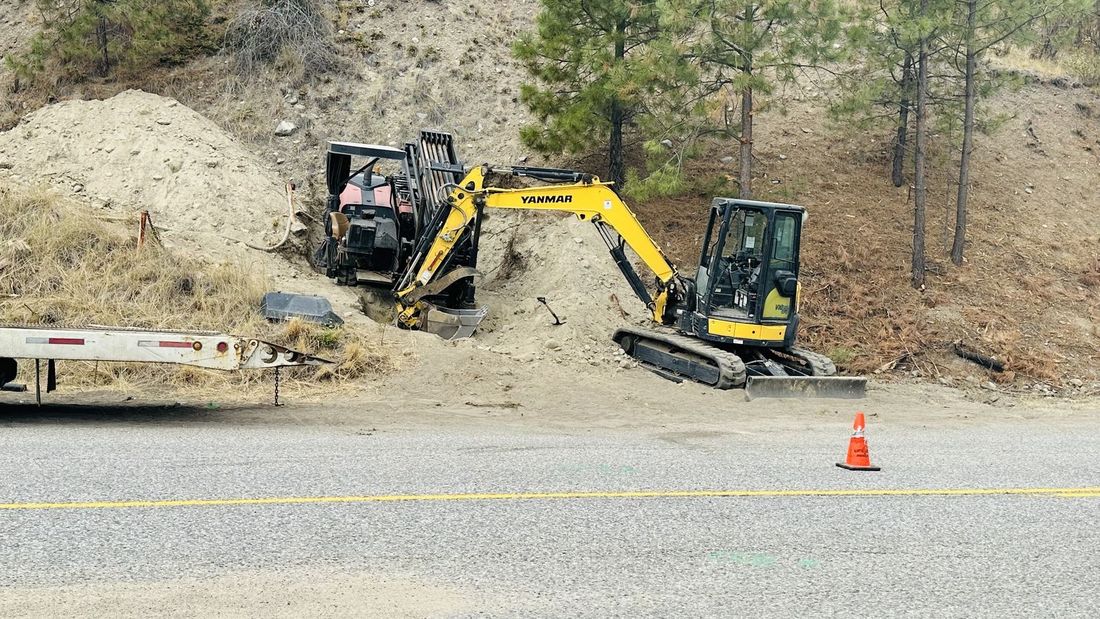
Ask anyone in the Fraser Valley who’s lived on acreage for a few winters and they’ll tell you the same thing: a driveway is only as good as what’s underneath it. A fresh load of gravel looks great in September. By February, if the prep was rushed, you’re dodging potholes, your tires are throwing mud, and the low spot by the gate has turned into a pond. The difference between a driveway that shrugs off our rain and one that falls apart by spring isn’t the gravel on top — it’s everything you don’t see below it.
At GroundStone Excavating, we build driveways and rural access roads the way they should be built for this climate: from the ground up, with the subgrade, drainage and materials all working together. Here are the questions landowners ask us most — and the straight answers that explain why some driveways last decades and others don’t.
Why do gravel driveways get potholes and ruts here?
Almost always, it comes back to two things: a weak base and bad drainage. Our Fraser Valley soil is heavy clay that holds water, and when a gravel surface sits directly on soft, wet ground with no proper base, the loads from your vehicles push the gravel down into the mud. That’s how ruts form. Add standing water with nowhere to drain, and the whole surface starts to break apart freeze cycle after freeze cycle.
The fix isn’t more gravel on top — that just disappears into the same soft ground. The fix is doing the foundation right the first time. Which brings us to the part that matters most.
What makes a driveway actually last? It starts with the subgrade.
The subgrade is the native ground your driveway is built on, and stabilizing it properly is the single biggest factor in longevity. Done right, the process looks like this:
- Strip and excavate. Remove topsoil, vegetation and soft organic material until you reach firm ground. Building on topsoil is asking for failure — on heavily treed lots this overlaps with land clearing.
- Stabilize the subgrade. On our wet clay, that often means laying down a geotextile fabric. This separation layer stops the gravel from sinking into the mud and the mud from pumping up into the gravel — a cheap step that dramatically extends the life of the driveway.
- Build the base in layers. A coarse structural base of larger crush goes down first and gets compacted, followed by a road-base layer (the well-graded mix of stone and fines that locks together into a hard, stable surface).
- Compact every lift. Each layer is compacted as it goes in, not all at once at the end. Proper compaction is what turns loose rock into a road.
- Top and crown it. A finishing layer of driving gravel, shaped with a crown so water sheds off to the sides instead of pooling in the middle.
What gravel is best for a driveway base?
Not all gravel is created equal, and the mistake we see most is round drain-rock or pea gravel used as a base — it never locks together, so it shifts and ruts forever. The right material for a base is angular crushed gravel with a mix of stone sizes and fines (often called road base or pit run, depending on the layer). Those angular edges and fines knit together under compaction into a surface that holds firm. A coarser structural layer underneath carries the load; a finer, well-graded layer on top gives you a smooth, packable driving surface. Matching the right material to each layer is half the craft.
How thick should the gravel be on clay soil?
There’s no one-size-fits-all number, and anyone who quotes you a depth without seeing the site is guessing. It depends on how soft the subgrade is, how much weight will use the driveway, and how wet the spot stays. A residential car driveway on decent ground needs less than a rural access road that has to carry a loaded gravel truck or a fire truck across soggy acreage. The softer and wetter the ground, the more base it needs — and sometimes geotextile fabric does more good than simply piling on extra rock. We assess your actual conditions and build the section to suit, so you’re not under-building or paying for material you don’t need.
How important is drainage?
In this climate, it’s everything. Water is what destroys driveways, full stop. A properly built driveway is crowned or sloped so rain runs off the surface, with ditches alongside to carry that water away. Where a driveway crosses a ditch — common on rural Langley and Abbotsford properties — a correctly sized culvert keeps the ditch flowing underneath instead of washing out your access. Get the drainage right and the gravel stays put for years. Ignore it, and no amount of rock will save you. If you’re already fighting water on the property, our guide to drainage solutions digs into the bigger picture.
It’s worth noting that connecting a new driveway to a municipal road or ditch can involve permits and an approved culvert installation. In the Township of Langley, for instance, access across a roadside ditch is done by means of an approved culvert. We handle that side so your new driveway ties in cleanly and legally.
What about erosion control?
On sloped lots and longer rural roads, erosion is the slow killer. Heavy rain running down an unprotected grade carves channels, strips away your surface material, and pushes silt into ditches and creeks — which the Township takes seriously. We control it with proper grading, cross-drainage to break up long runs of water, ditch lining where needed, and seeding or riprap on exposed slopes. Keeping water moving in a controlled way, rather than letting it run wild, is what protects both your investment and the land around it.
Why GroundStone Excavating?
A driveway is one of those things you only want to build once. We know how Fraser Valley ground behaves, we build the base and drainage to handle our weather, and we use the right materials for each layer instead of cutting corners you’ll pay for later. A new driveway is often the access piece of a larger site preparation job — whether it’s a residential driveway or a long rural access road across acreage, we’ll build you something that holds up year after year.
Want a driveway built to last? Let’s do it right from the ground up.
Book a free, no-pressure on-site estimate for driveway or access road work anywhere in Langley and the Fraser Valley, or see the full range of what we do.